Michał Michalak

Scientific interests: computational geometry in geological modelling, machine learning in Earth sciences, statistical methods in Earth sciences, risk metrics for surveillance of infectious diseases

Scientific degrees:

  • Habilitation: 28.09.2026, awarded on the basis of several achievements, including the cycle of five publications entitled "Combinatorial methods, computational geometry and machine learning in the geometric analysis of geological surfaces", Reviewers: Professor Jacek Tabor from the Jagiellonian University (positive), Professor Artur Przelaskowski from the Warsaw University of Technology (positive), Dr hab. Marcin Dąbrowski from the Polish Geological Institute (positive) and Dr hab. Mirosław Kowaluk from the University of Warsaw (positive), https://bip.malopolska.pl/agh,a,2814997,dr-michal-michalak.html
  • PhD: 16.03.2021, awarded on the basis of the PhD thesis (in Polish): "Integracja wybranych metod i technologii w celu wyznaczania i porównywania orientacji powierzchni geologicznych". Supervisors: prof. Lesław Teper (main - Uniwersytet Śląski w Katowicach), dr Paweł Gładki (auxiliary - Uniwersytet Śląski w Katowicach); Reviewers: Dr hab. Mariusz Młynarczuk from the AGH University (positive); Professor Krzysztof Labus from the Silesian University of Technology (Politechnika Śląska - positive). https://bip.us.edu.pl/pl/doktoraty/mgr-michal-michalak

I work now at the AGH University in Kraków. I have obtained the doctoral degree at the University of Silesia in Katowice, a school known for the prominent leader of the Polish Judges’ Association „Iustitia” nominated to the Nobel Peace Prize.

Subsurface geological modeling

I use data-driven methods to identify novel structures within geological surfaces.

Spatial epidemiology

Do you know that well-known organisations such as Robert Koch Institute use biased metrics to estimate COVID-19 burden?

Ecclesiological dynamics

Three competitive ecclesial factions can have a common enemy which generates turbulent interactions

What I do

I have conducted scientific reviews for the following journals (not all are listed): Computers&Geosciences, Earth Science Informatics, Geoscientific Model Development and Gondwana Research

I can offer trainings about 1) using my software for building and interpreting data-driven subsurface geological models, 2) creating COVID-19 shinyApp (with theory)

GeoAnomalia

Combining a C++ code, ParaView visualizations, and R template to reveal compartmentalization pattern based on geometric anomalies. What is needed: points (XYZ) documenting a geologic, bathimetric or topographic surface.

GeoTeoria

You will probably need some background knowledge to learn about limitations and interpretation rules.

COVID-19 app

If you have unbiased metrics, building a Shiny app for monitoring infectious diseases is a good step forward.

COVID-19 metrics

Learn quickly about different metrics for assessing COVID-19 burden and our recent development.

Publications

Below you can find some papers (or accepted preprints) from peer-reviewed journals:

Meetings

List of selected meetings

    2025
  • European Geoscience Union General Assembly, Vienna, 27.04-02.05.2025, Michalak, M., Gerhards C., Menzel, P., SubsurfaceBreaks: A supervised detection of fault-related structures on triangulated models of subsurface slopes (oral presentation).
  • 2024
  • Technische Universität Bergakademie Freiberg, two stays aimed to: 1. develop a framework for supervised detection of faults on triangulated models of homoclinal interfaces (manuscript accepted in Geoscientific Model Development), 2. analyze geometric singularities using a combinatorial algorithm applied for geological interfaces
  • 2023
  • Technische Universität Bergakademie Freiberg, “Combining computational geometry and machine learning in 3D geological modelling" - a lecture on request, 07.12.2023
  • OpenGeoHub Summer School Poznan 2023, “Processing and visualizing large geospatial data using R, Python and Julia”, 27.08.2023 – 02.09.2023
  • CETEG 2023, Kazincbarcika, 12-15.04.2023, Michalak, M., Structural interpretations of clustering results applied to 3D orientation data.
  • 2022
  • AGU Fall Meeting, Chicago, 12-16.12.2022, Michalak, M., Kulawik, A., Węglińska, E., Leśniak, A., Lupa, M., Cordes, J., Reducing bias in risk indices for COVID-19: looking for more fair and epidemiologically interpretable rankings.
  • AGU Fall Meeting, Chicago, 12-16.12.2022, Michalak, M., Turoboś, F., Gładki, P., Explainable Clustering Models for Structural Geology Measurements.
  • 21st Annual Conference of the International Association for Mathematical Geosciences, Nancy - online, 29.08.2022-03.09.2022 Michalak M., Turoboś F., Gładki, P., Combinatorial and topological considerations for conducting angular distance measurements between geological interfaces.
  • 2021
  • RING Meeting, Nancy, 06-10.09.2021, Michalak, M., Kostur, M., Teper, L., Wellmann F., Reducing bias in a triangulation-based variant of spatial clustering (poster presentation)
  • European Geoscience Union General Assembly, online, 19-30.04.2021, Michalak, M., Teper, L., Parallel or not? Quantitative and qualitative methods to identify dissimilarities between sub-conformable contacts (pico presentation)
  • 2019
  • European Geoscience Union General Assembly, Vienna, 7-12.04.2019, Michalak, M., Bardziński, W.,Teper, L., Testing the efficiency of selected numerical approaches for retrieving the average orientation of subsurface data (oral presentation)
  • Central European Tectonic Groups, Rozdrojovice (Czech Republic), 24-27.04.2019, Michalak, M., Bardziński, W.,Teper, L., Determining the orientation of a sub-horizontal contact lying within Kraków-Silesian Homocline (Poland) – on selected problems with application of Delaunay triangulation and cluster analysis (oral presentation).

Projects

Receiving a grant is always a long shot, thus I'm not in favour (in fact strongly against) of assessing individual researchers by the number of grants they have received. In fact, I tried six times before I received the (2020/37/N/ST10/02504) grant... However, current regulations require candidates aspiring to academic degrees/titles to lead scientific grants 😅

  • 2026
    "GeoIntelligence 3D: Inteligentny system automatycznego wykrywania uskoków w warunkach deficytu danych wiertniczych dla optymalizacji wydobycia surowców i poprawy bezpieczeństwa kopalń" — LIDER UP (Narodowe Centrum Badań i Rozwoju)
    Kwalifikacja do I fazy (szkoleniowej), 14. miejsce na 629 kandydatów.
    Learn more about this project (NCBiR)
  • 2021–2023
    ENG: Comparing the orientation of geological contacts: developing a new metric to detect and quantify angular unconformities between geological contacts, Kraków-Silesian Homocline case study.
    PL: Porównywanie orientacji kontaktów geologicznych: opracowanie nowej metryki do wykrywania i kwantyfikacji niezgodności kątowych między kontaktami geologicznymi na przykładzie monokliny śląsko-krakowskiej.
    Grant No. 2020/37/N/ST10/02504
    Learn more about this grant (National Science Centre)

Awards and certificates

List of awards and certificates

    2024
  • TVN Warner Bros. Discovery - a thank you letter
  • 2023
  • AGH Rector scientific award II deg.
  • IDUB AGH - Działanie 2, II st.
  • 2021
  • Geologia 2021 - Główny Geolog Kraju - Chief Geologist of Poland, distinction, check
  • PhD dissertation - wyróżnienie (sort of "cum laude")
  • 2019
  • scientific scholarship granted by the Polish-American Freedom Foundation
  • 2018
  • scientific scholarship granted by the Polish-American Freedom Foundation
  • 2017
  • Cambridge English Level 1 Certificate in ESOL International (First) - Council of Europe Level B2, June 2017
  • Microsoft IT Academy Programme, Microsoft Approved Course: ITA 105: programowanie obiektowe C#, March 31, 2017

Teaching

Teaching materials available via UPEL platform.

  • Modelowanie danych przestrzennych (GIS) (Modelling spatial data)
  • Metody optymalizacji (Optimization methods)
  • Systemy geoinformatyczne (Geoinformatics systems)

Fun facts

I have completed scientific collaboration (published papers) with people from the following institutions:

  • Harvard University
  • Tufts University
  • Technische Universität Bergakademie Freiberg
  • RWTH Aachen
  • University of Vienna
  • Geological Survey of Norway
  • The University of Texas at Austin

However, I have also been blocked by:

  • Ramzan Kadyrov (Chechnya, on Telegram)
  • Lech Wałęsa (on Facebook)
  • FSSPX Silesia (on Facebook)
  • Archdiocese of Kraków (on Twitter)
  • Oskar Szafarowicz (PiS, on Twitter)
  • Łukasz Mejza (PiS, on Facebook)
  • Krystyna Pawłowicz (PiS, on Twitter)
  • Przemysław Kral (CEO zondacrypto, previously administrator of S&B Investment; on X; no longer blocked - an interesting effect observed on 16.09.2025 but blocked again on the same day few hours later)
  • Dariusz Matecki; on X
  • dr hab. Krzysztof Piech ; on X
  • Phil Konieczny ; on X

SLAPP campaign in progress (related to my interview in Superwizjer TVN "Co się stało z królem kryptowalut?")

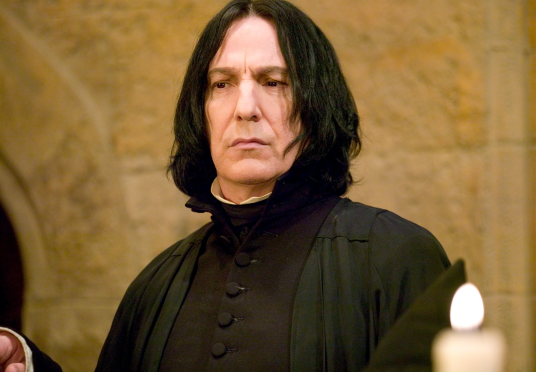
Some people consider MTBI classification as pseudoscience, but personally it helped me a lot in understanding other people's behaviour. I have been repeatedly diagnosed as INTJ (with few exceptions), a type associated with Professor Severus Snape.
Get in touch

Simply e-mail me: michalm . at . agh.edu.pl